
Why Australia Is One of the Best Countries to Study Aviation
What Qantas Taught Me and Why It Matters for Your Aviation Career
AVIATIONAIRLINE
By Jessica Goya de Hoog | Goya de Hoog Consultancy
3/25/20262 min read
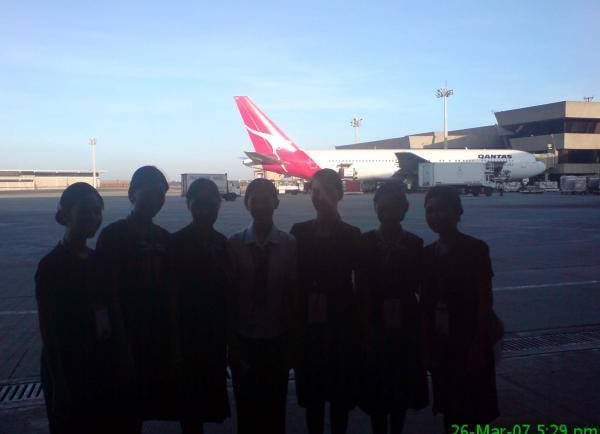
Manila, 2007. I was with my colleagues on the tarmac during Qantas ground handling operations at the airport.
My first real understanding of airline safety didn’t just come from the classroom; it came from a film.
Back in 2007, I was working as ground personnel for Miascor. I had already completed rigorous induction training and passed my exams with distinction, but my journey really took shape through the high standards of the airlines I served.
Before I was assigned to Saudia Airlines, I was first trained at Qantas. At the time, Qantas was widely regarded as the safest airline in the world. Before we were even deployed, they showed us a film detailing their legendary safety culture. That commitment to excellence stayed with me throughout my career, setting the benchmark for everything I did from that moment on.
Seeing how seriously this industry treats safety is powerful. Every procedure has intent. Every standard carries weight. Aviation is not just about flying; it is about discipline, responsibility, and precision. That perspective has stayed with me, and I carry it into my work guiding people through life-changing educational decisions.


Qantas is the #3 Safest Airline in the World for Full Service, 2026
Years later, Qantas continues to earn that reputation. It is consistently ranked among the world’s safest airlines by AirlineRatings.com, assessed across hundreds of carriers on safety audits, incident history, fleet age, and pilot training standards. Decades of consistency. Not because of marketing, but because of culture. And that culture is deeply connected to where Qantas comes from: Australia.
1. A licence that is recognised worldwide
Australian aviation training is regulated by Civil Aviation Safety Authority (CASA). CASA licenses meet ICAO standards and are widely recognized internationally, subject to local license conversion requirements. You are building a globally portable qualification.
3. Schools with real industry pathways
Australia generally offers favorable flying conditions, particularly in Western Australia, South Australia, and Queensland. More flyable days mean more hours logged, and more hours mean a stronger career foundation.
2. Flying conditions that actually let you fly
RMIT University maintains strong industry connections. Flight Training Adelaide trains cadets for airlines such as Cathay Pacific and IndiGo, with graduates moving into airline operations.
These are not just qualifications; they are career pathways.
If you are thinking about studying aviation, here is why Australia deserves to be at the top of your list:
4. It is not only about the cockpit
Aircraft Maintenance Engineering (AME) is a high-demand and often overlooked pathway. CASA and EASA approved programs cover Airbus, Boeing, and ATR aircraft. For career changers, AME offers a rigorous, globally transferable qualification without requiring pilot flight hours.
For the right person, with the right preparation, you will be training in the same country, under the same safety culture that shaped one of the most respected airlines in the world.
Choosing a career in the skies is a major life decision. As an education agent who has lived in this industry, I understand the technical requirements and have a genuine passion for this profession.
If you are considering an aviation pathway in Australia and want honest, structured guidance, I would be glad to help you think it through.
📩contact@goyadehoog.com
Know more about Student Visa: https://www.goyadehoog.com/study-and-student-visas
Stay informed with expert insights on Australian migration and education. Join our community for strategic updates tailored to your world-class journey.
By subscribing, you agree to our Privacy Policy.
SUBSCRIBE NOW!
KNOW THE LATEST
Follow our Social Media page
Contact details:
contact@goyadehoog.com
+31 657782297
© 2026. All rights reserved.

KVK 96682329
BTW NL005226316B81
Keizersgracht 520H, 1017 EK Amsterdam
Website designed and developed by: Jessica Goya de Hoog
All migration services are provided by our partner Registered Migration Agent (RMA) in accordance with the MARA Code of Conduct. Goya de Hoog Consultancy is a private entity and is not affiliated with the Australian or The Netherlands Governments.
Useful LinkS:
FAQ
Home
Contact Us
Intake Form